
Words by Hayley Guest, Creative Lead.
Two full days of R&D (research and development) landed in our calendars at the beginning of 2025, and as a small and (very!) busy arts organisation, we grasped on to the opportunity with both hands. Over the last two years as we’ve developed our community engagement programme, our facilitation team has grown steadily alongside that. We have a wonderfully diverse team of artists, each bringing a unique creative experience and skill set. Spectra’s creative practice has always been multi-disciplinary; sessions bring a blend of music and movement, or theatre and songwriting, for example.
With the addition of visual artists to our team, we were able to offer a wider range of creative opportunities to our community settings and seek to engage them in a different way. However, we knew that we needed to join the dots between the visual arts practices and the more ‘performance’ focused art forms. We wanted to explore how our individual ways of delivery and engagement could be brought together as a cohesive creative workshop that held shared visions of what good practice looks like in our radically inclusive spaces.
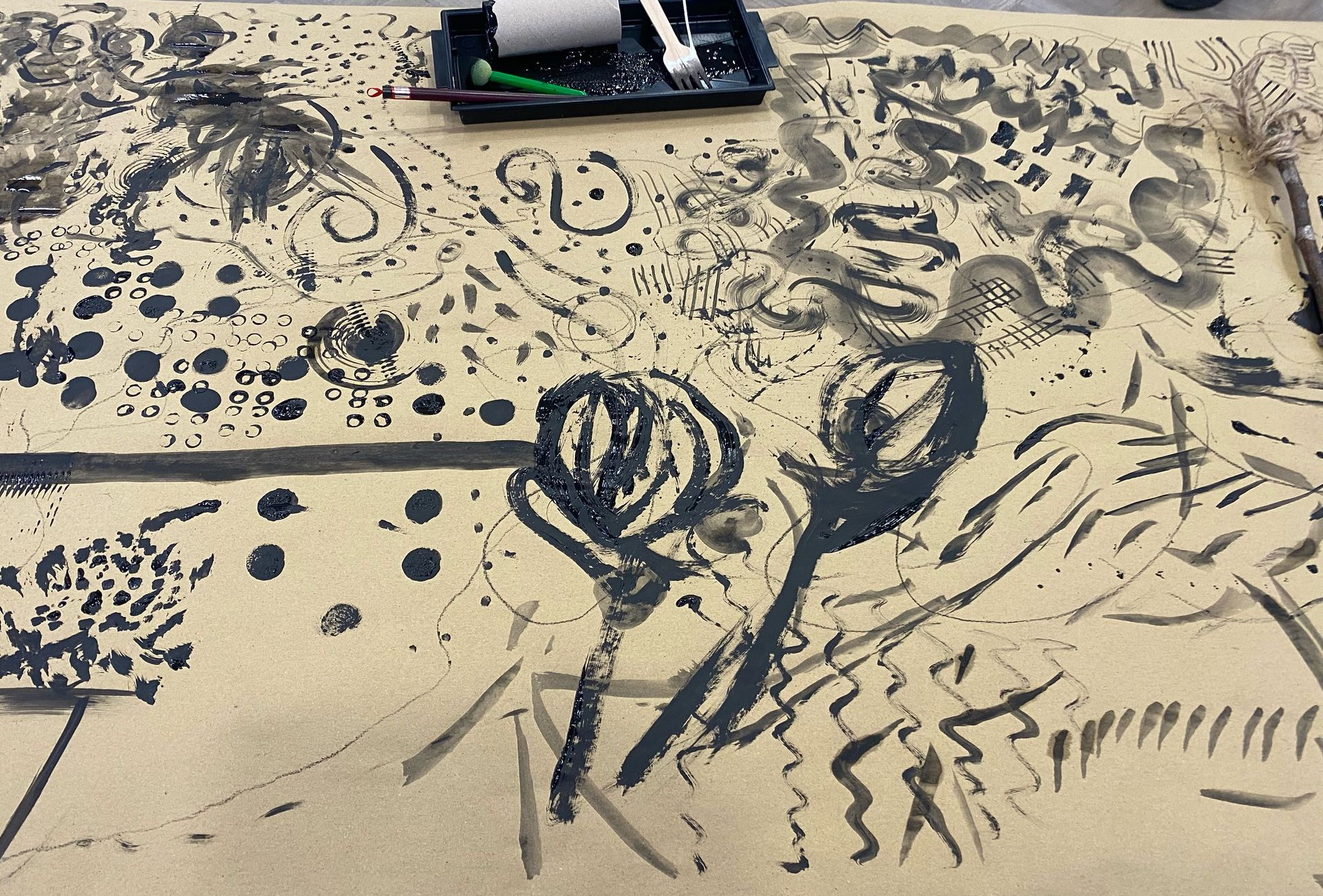
Over two days, 12 artists came together to share, explore, test, listen, be present, and get inspired. Each artist was asked to bring a creative task with them to share with everyone; something that they wanted to test out or receive feedback on. It was really valuable and important time together and I’ve reflected on that time quite a bit over the last couple of months. Below I’ve listed some of the things that I believe made the R&D useful and transformative for the company.

We approached the R&D from a playful perspective. To centre the action of play in our R&D was intentional; being in a playful state is conducive to the processes of discovery that helps further creative ideas. To be playful is to be curious, to be open to possibilities, and less focused on a specific outcome. Wherever we start on the creative journey, we go together, but the direction and outcome is unknown. It leaves space for things to surprise us and work in a different way than we planned.
We kept the creative boundaries loose, but held the space closely. There was a clear direction of ‘there’s no right or wrong here’, which is freeing and allows for individual interpretation without any judgement that it doesn’t fit pre conceived ideas of what a creative response should look or feel like. Whilst this allowed creativity to run wild and free, we were careful to make sure that the space we worked in felt held and safe for these responses to happen.
We opened the space and began our sessions with grounding exercises and games. Arriving in a space, bringing lots of people who may not know each other very well together in a room – it can feel like a lot! Each morning started with a grounding exercise; addressing the need for the body and mind to ‘land’ in the space, to adjust from our individual journeys and experiences of the outside world, to how we come together in the shared space. We break the day up with short games too, to help keep our brains and bodies energised and playful.
We recognised the value of different perspectives. Spectra’s spaces are neurodiverse; we bring together people whose brains work in different ways to make and create work together. Everyone in the room had a unique sensory experience of each creative task, so we allocated time and space for everyone to feedback and discuss this with the whole group. This gave us really valuable information for future sessions out in the community; an understanding of where people may find things overwhelming or confusing, and how we can adapt our activities to address this.

We had clear outcomes and ways forward. Although the creative doors of opportunity were held wide open, we had some clear aims for the two days of working together. We knew that we were aiming to create a shared resource of activities and ways of working together by the end of the R&D process. We wanted the artists, whether their practice was movement, visual arts, sound, music, theatre, sensory or writing based, to feel comfortable working alongside any other Spectra facilitator in the future. We learned how these different practices fitted together, developing a shared vision of what we wanted the creative space to look, feel, and sound like.
The two days of R&D were clear time put aside for creative head space, for thinking, for just ‘being’. As facilitators we were all familiar with the feeling you get when you have a busy schedule of workshop delivery. As much as we enjoy sharing our practice with others, there is a recognition that holding space for others to be creative takes a lot of energy. You give a lot as a facilitator, and whilst the work is rewarding in lots of ways, after a busy period we often feel we need some creative nourishment. Time carved out for our own creative curiosity and playfulness to come forth and be centre stage. Time spent with generous, open, curious and playful artists, making plans for the future. To me, that’s why the R&D felt like a gift, and I received it with so much gratitude!